International Advisory Board of Institute of Physiology CAS
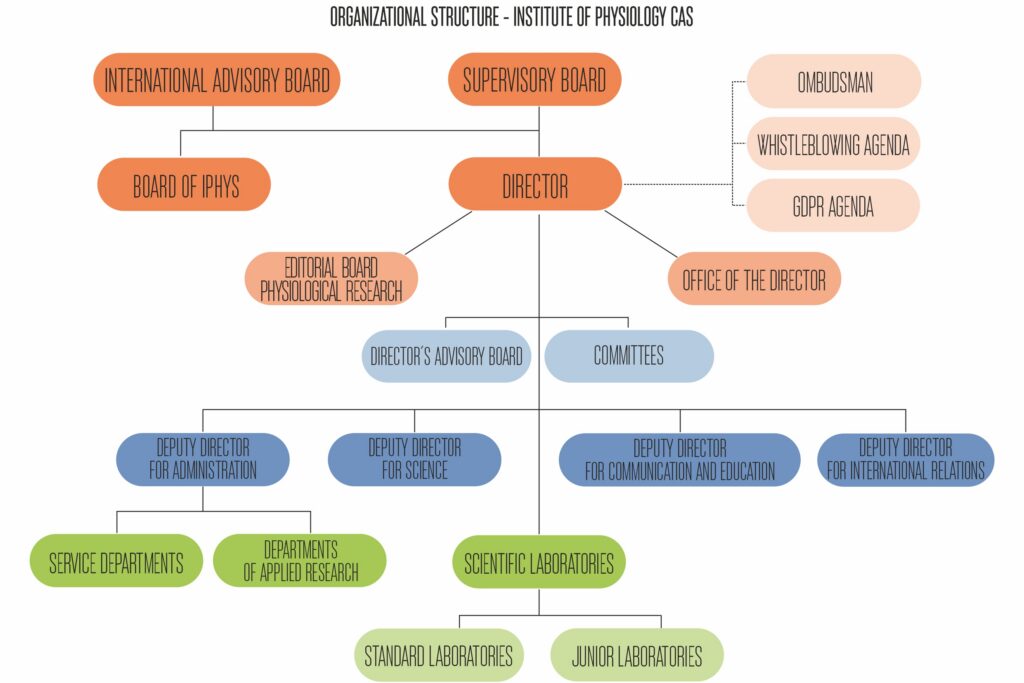
The IPHYS International Advisory Board (IAB-IPHYS) is an independent body composed of five internationally recognized scientists. The main objective of the board is to offer assistance in developing the IPHYS research strategy, international cooperation and visibility, and participation in large-scale international projects.
The first IAB-IPHYS meeting was on November 2, 2020, followed by the election of the board Chairperson for a two-year term. The further meeting of IAB-IPHYS was held on 13 and 14 October 2022 and 2 June 2023.
Prof. Adam Szewczyk
Chairperson

Head of the Laboratory of Intracellular Ion Channels, Chair of Scientific Council at Nencki Institute, Nencki Institute of Experimental Biology, Polish Academy of Sciences, Warsaw, Poland
Adam Szewczyk, born in 1960 in Wroclaw, Poland. He is Professor of Biochemistry, Chair of Scientific Council at Nencki Institute of Experimental Biology, Poland, and since 2022, he serves as a President of Polish Biochemical Society. Adam Szewczyk completed his chemical studies at the Warsaw University and his postdoctoral fellowship at Bern University (Switzerland), Institute of Cellular and Molecular Pharmacology – Nice University (France) and at Johns Hopkins University, Baltimore, MD. He is the Head of the Laboratory of Intracellular Ion Channels at Nencki Institute. Adam Szewczyk’s research is focused on the role ion channels on mitochondrial function and intracellular ion channels pharmacology and biophysical properties of mitochondrial potassium channels. Adam Szewczyk served (for 10 years) as Director of the Nencki Institute and (for 9 years) as Federation of European Biochemical Societies – Congress Counsellor at FEBS Executive Committee. He has published over 120 scientific articles in the areas of bioenergetics, membrane transport and ion channels pharmacology.
Prof. Francesc Villarroya Gombau, Ph.D.
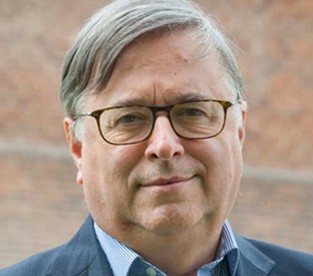
A full professor of Biochemistry and Molecular Biology at University of Barcelona
Francesc Villarroya Gombau, PhD, is a full professor of Biochemistry and Molecular Biology at University of Barcelona.
Prof. Francesc Villarroya Gombau, PhD, is a leading Spanish biochemist and molecular biologist whose research has substantially advanced the understanding of the role of brown and white adipose tissue in the regulation of energy metabolism, obesity and cardiometabolic disease. He serves as Professor of Biochemistry and Molecular Biology at the University of Barcelona and as Senior Group Leader of the “Adipose Tissue Molecular Biology and Gene Regulation and Associated Disorders” research group at the Sant Joan de Déu Research Institute in Barcelona.
His group focuses on the molecular mechanisms controlling brown and white adipose tissue function, its inflammatory and endocrine roles, and their contribution to the pathogenesis of obesity, diabetes, lipodystrophies and cardiovascular complications. Professor Villarroya is the author of highly influential work on brown adipose tissue as a secretory organ and on inflammation of brown/beige adipose tissues in obesity, which rank among the most cited studies in this field.
His recent publications and international collaborations also address the role of adipose tissue in the action of modern incretin- and glucagon-based anti-obesity drugs, lipid-associated immune cells in adipose depots, and the cardiometabolic impact of altered adipose tissue function, including in people living with HIV. Professor Villarroya acts as an advisor to several international research institutions and agencies and has received prestigious distinctions, including the ICREA Academia award, reflecting his long-standing scientific contributions in metabolism and endocrinology.
Prof. Dr. Matthias Blüher
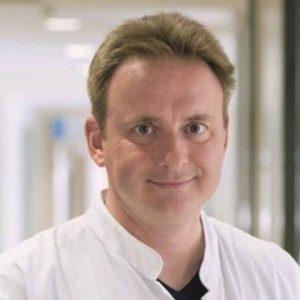
Director of the Helmholtz Institute for Metabolic, Obesity and Vascular Research, Leipzig, Germany
Matthias Blüher is Professor of Clinical Obesity Medicine, Director of the Helmholtz Institute for Metabolism, Obesity and Vasculature research at the Helmholtz Center Munich and the University of Leipzig, Germany. He is Speaker of the Collaborative Research Center “Obesity mechanisms” at the University of Leipzig in Leipzig, Germany. Matthias Blüher´s research is focused on the role of adipose tissue function and distribution in insulin resistance, the development of obesity, type 2 diabetes and other metabolic and cardiovascular diseases. Matthias’ work has been recognised both nationally and internationally, as he is a recipient of the Obesity Research Award of the German Obesity Society 2003, the Ferdinand-Bertram-Prize of the German Diabetes Association 2008, a European Association for the Study of Diabetes (EASD) Minkowski Award (2008), and the Minkowski Prize of the EASD 2015. Professor Blüher completed his medical studies at the University of Leipzig and his postdoctoral fellowship at the Joslin Diabetes Centre (C. R. Kahn), Harvard Medical School, Boston, USA.
Prof. Dr. med. Pontus Persson

Director of the Institute of Vegetative Physiology, Editor in Chief of Acta Physiologica, Berlin, Germany
Persson, born in 1962 in Lund Sweden received his education in the USA, Germany and Italy. After his appointment of full professor of Physiology 1994 at the Charité-Universitätsmedizin Berlin, Germany he became Chief of the Institute for Vegetative Physiology. He was awarded with the Ruprecht-Karls-Prize of the University Heidelberg (1990), the Research Prize of the German Research Foundation (Deutsche Forschungsgemeinschaft: Gerhard-Hess-Förderprogramm) (1991, 1 Mill. DM), the Young Investigator Award of the American Physiological Society (1998) and the Henry Pickering Bowditch Award of the American Physiological Society (2002). Persson served as Editor-in-Chief of the American Journal of Physiology – Regulatory, Integrative and Comparative Physiology from 2001-2007. Starting 2011 he is Editor-in-Chief for the Journal Acta Physiologica (Oxford). Since 2015, he is a Fellow of the American Physiological Society. He has published over 250 scientific articles in the areas of kidney- and cardiovascular physiology. His research was supported by a double digit million Euro sum provided by various national and international agencies.
Prof. Marianne Schultzberg, PhD

Professor of clinical neuroscience, Karolinska Institutet, Sweden
Marianne Schultzberg is professor in clinical neuroscience at Karolinska Institutet (KI) since 2005 and served as Pro-Dean of doctoral education at KI from 2012 and as Dean of doctoral education during 2016 to 2018. She received her doctoral degree in 1980, performed a postdoc in England and has been a visiting scientist at NIMH, USA. Her research concerns the role of neuroinflammation in neurodegenerative disorders such as Alzheimer’s disease (AD) and combines cellular and animal experimental models in a translational approach based on in vivo and in vitro models in close association with the Geriatric clinic at Karolinska University Hospital, with the goal to find new treatment strategies. The resolution of inflammation in the brain is her current research focus. Inflammation is the response of the organism to cope with various types of harmful stimuli, and normally ends when the stimulus is removed, and homeostasis of the tissue is restored. This process, resolution, involves clearance of tissue debris, down-regulation of pro-inflammatory factors and stimulation of regeneration of the tissue.