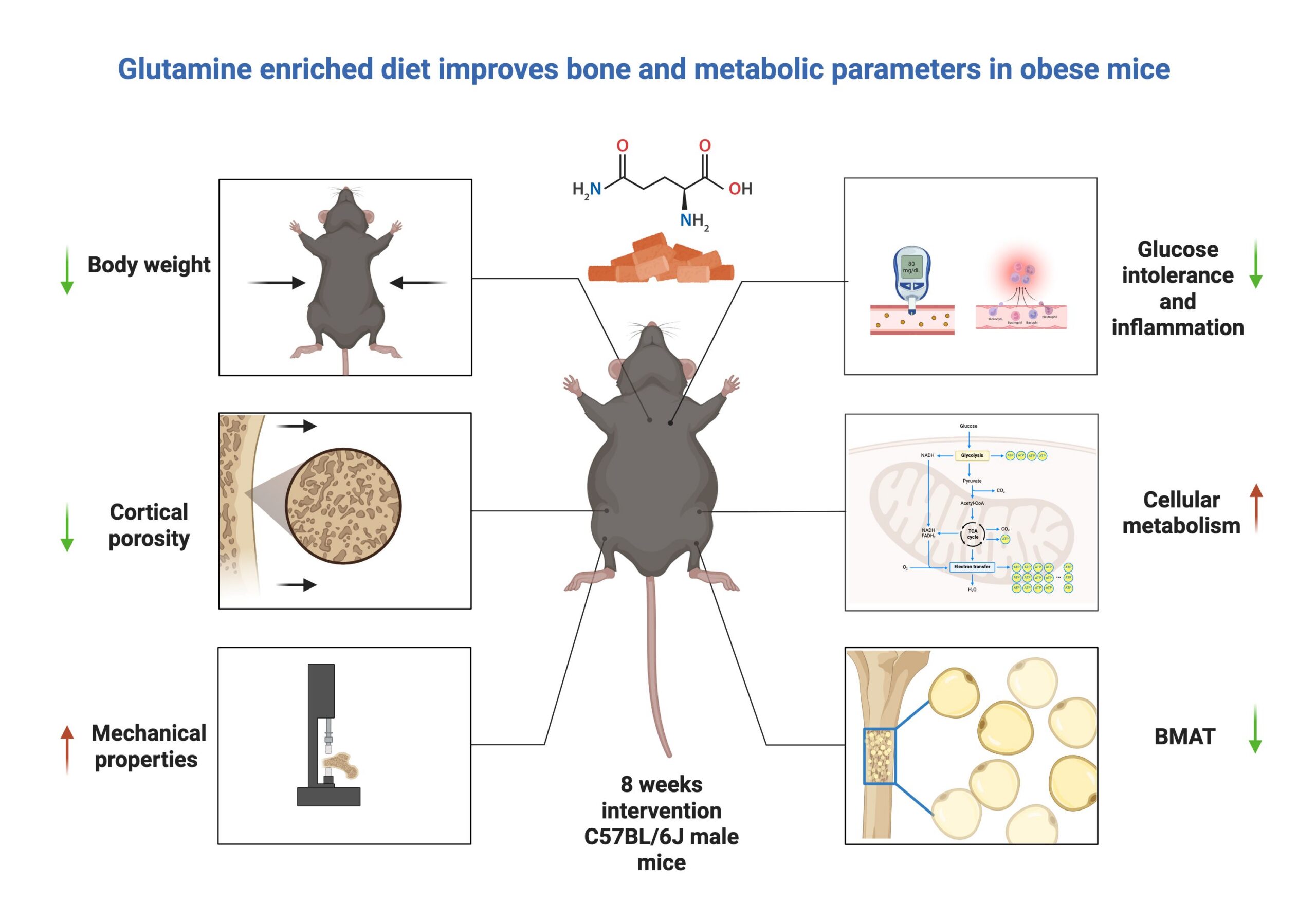
The amino acid glutamine may protect bones from obesity-related damage while improving the body’s overall metabolic state. A new study from IPHYS, published in Clinical Nutrition, describes how adding glutamine to the diet of obese mice improved bone quality, reduced fat in both body and bone marrow, and enhanced blood sugar regulation.
Glutamine is the most abundant free amino acid in the blood. It participates in the synthesis of cellular building blocks and serves as an important energy source, especially for immune cells and bone marrow cells. Obesity is often associated with reduced circulating glutamine levels, chronic inflammation, and impaired bone homeostasis – a combination that significantly increases the risk of fractures. However, the effects of glutamine on bone and adipose tissues have not been sufficiently explored.
“Our study shows that glutamine is not merely an energy source. In the obese organism, it acts as a metabolic guardian—supporting stem cell function, suppressing inflammation, and protecting bone integrity,” says Michaela Tencerová, corresponding author of the study and Head of the Laboratory of Molecular Physiology of Bone at IPHYS.
How glutamine affects fat tissue and bones
Laboratory mice fed a high-fat diet supplemented with glutamine gained less weight, had lower amounts of adipose tissue, and showed improved glucose tolerance. Glutamine also reduced inflammation in white adipose tissue and improved its structure. Beneficial effects of glutamine supplementation in obese mice were also evident in bone tissue: glutamine improved bone microarchitecture, increased bone mass, enhanced mechanical strength, and reduced bone marrow fat.
At the cellular level, glutamine helped maintain stem cell balance by suppressing their transformation into adipocytes while promoting bone formation. Gene expression and metabolic analyses revealed that glutamine “reprograms” cellular metabolism in bone marrow and adipose tissue – enhancing energy efficiency, strengthening antioxidant defenses, and dampening inflammation-related pathways.
The researchers also discovered that glutamine metabolism differs between sexes in human bone marrow cells, underscoring its physiological and clinical significance.
Although further clinical studies are needed, this research demonstrates that targeting amino acid metabolism could represent a new nutritional strategy for preventing metabolic disorders and bone diseases associated with obesity.
Glutamine as a dietary supplement
A balanced diet rich in protein (meat, milk, cheese, legumes) typically provides enough glutamine. However, its demand may increase during illness or intense physical stress. Glutamine supplementation should always be discussed with a physician.
This study was conducted through international collaboration between IPHYS and scientific institutions in Switzerland and Belgium, supported by national and international grants: GAČR 22-12243S; EFSD/Novo Nordisk Foundation Future Leaders Award (NNF20SA0066174); National Institute for Research of Metabolic and Cardiovascular Diseases (Programme EXCELES, Project ID LX22NPO5104) – funded by the European Union – Next Generation EU.
Reference: Džubanová M. et al.: Glutamine: A Novel Player in Maintaining Skeletal Strength and Body Fitness in Obese Mice. Clinical Nutrition 54:162–176 (2025). DOI: 10.1016/j.clnu.2025.09.018. IF = 7.4