The team led by Michaela Tencerová from the Laboratory of Molecular Bone Physiology of IPHYS, in collaboration with Siobhan Craige’s laboratory from Virginia Tech in the USA, published a study in the prestigious journal Redox Biology. The study brings new insights into the complex interaction between genetics, sex, and an obesogenic environment in the regulation of metabolism and uncovers a distinct role for the enzyme NADPH oxidase 4 (NOX4) in controlling metabolic processes in males and females.
Reactive oxygen species (ROS), produced via the key enzyme NOX4, are important mediators of cellular signaling and can play a dual role in the regulation of glucose and lipid metabolism. However, their involvement in sex-specific regulation of metabolism remains poorly understood.
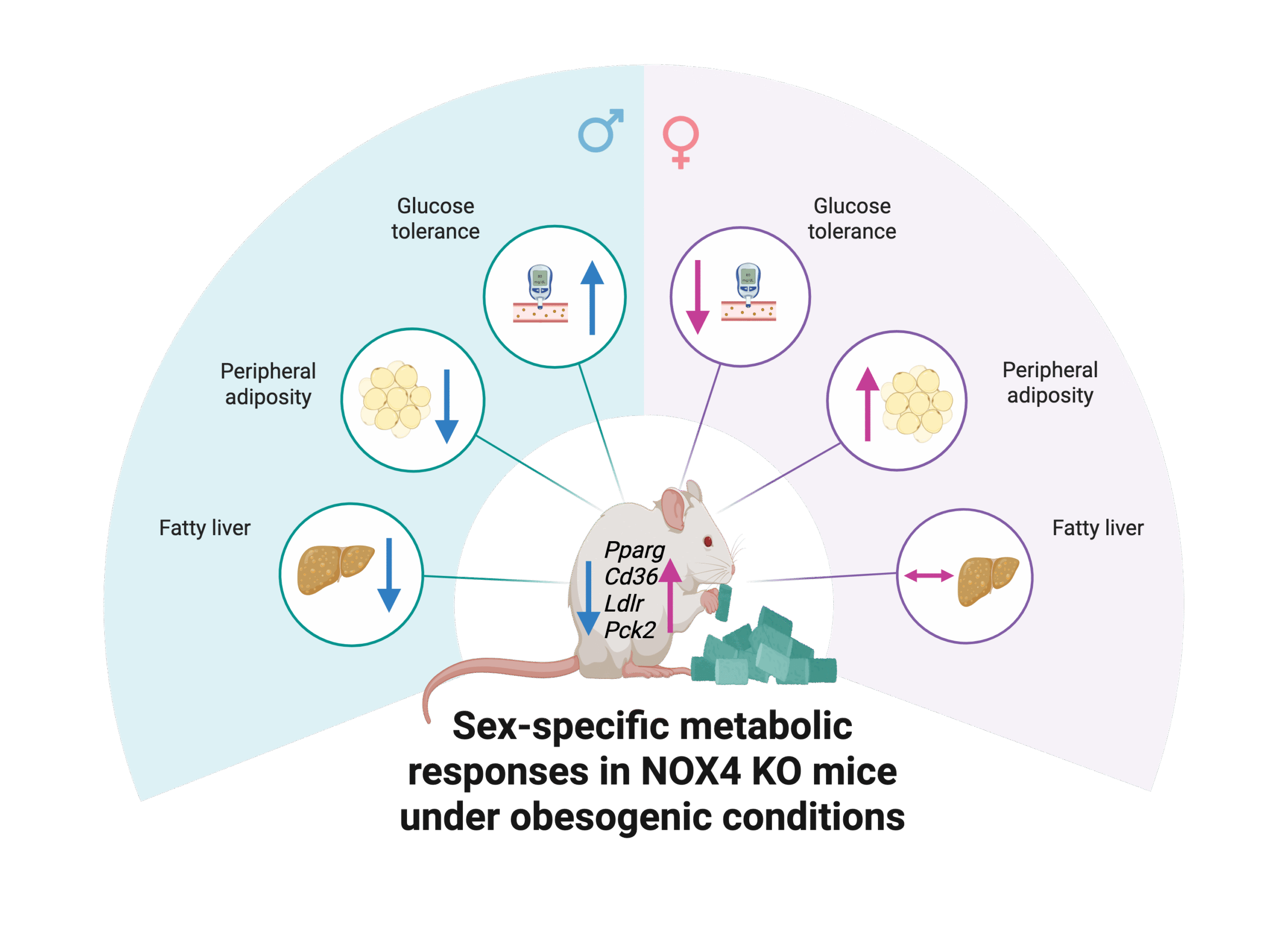
Using a mouse model with the NOX4 gene deleted, the researchers examined the impact of this genetic modification on changes in body composition and metabolism during a high-fat diet.
In NOX4-deficient males, a high-fat diet led to reduced body fat, less fat accumulation in the liver, and improved glucose and insulin tolerance compared to the control group. In contrast, females lacking NOX4 on the same diet actually increased their body fat, had poorer glucose tolerance, and their fat stores accumulated more in peripheral tissues, the liver, and muscles. The scientists also found that these differences are linked to distinct activation of redox-dependent transcriptional pathways, particularly those associated with the regulatory nuclear receptors PPAR, which play a key role in the regulation of both lipid and carbohydrate metabolism.
“Our findings show that NOX4 is not just a regulator of metabolism—it plays opposing roles in males and females and thus regulates oxidative processes differently in response to obesogenic conditions,” said Michaela Tencerová. “This could have a significant impact on the development of targeted treatments for metabolic diseases such as obesity and diabetes with regard to sex.”
The results highlight the necessity of including sex as a critical biological factor in both basic and applied metabolic research and open new avenues for more targeted treatment of obesity and metabolic disorders tailored specifically to male or female populations.
This research was made possible thanks to collaboration with the American team of Dr. Siobhan Craige from Virginia Tech (USA, NIH), with support from prestigious grant programs (such as EFSD/Novo Nordisk Foundation Future Leaders Award, EXCELES – National Institute for Research on Metabolic and Cardiovascular Diseases funded by the European Union – Next Generation EU), and builds on the team’s long-standing interest in the molecular and gender-specific mechanisms of obesity and diabetes.
Reference: Bond J.M., Dzubanova M., Addington A.K., Najt C.P., Gilbert E.R., Tencerova M.*, Craige S.M.*: Sex-specific metabolic responses to high-fat diet in mice with NOX4 deficiency. Redox Biology 85, 103698 (2025). IF = 11.9 DOI: 10.1016/j.redox.2025.103698