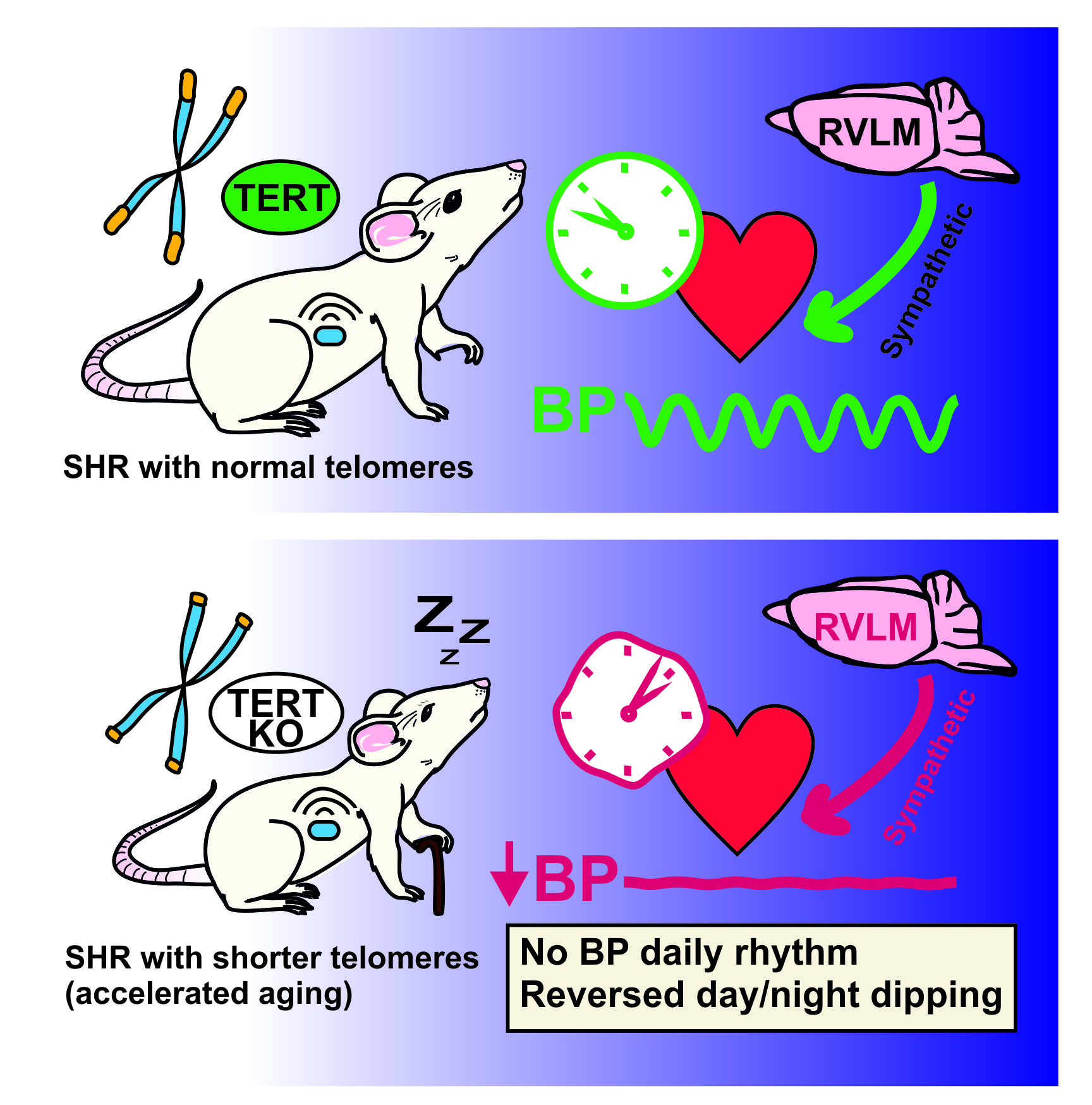
Telomeres are protective “caps” at the ends of DNA strands (chromosomes) in cells that prevent chromosomal damage. Their length is maintained by the protein TERT, and deletion of the Tert gene leads to telomere shortening. This process is associated with ageing and age-related cardiovascular diseases. A new study from IPHYS, published in Hypertension, shows that loss of the Tert gene reduces the number of neurons regulating blood pressure and disrupts the natural circadian variation of blood pressure in spontaneously hypertensive rats.
In this work, researchers generated a genetically modified line of spontaneously hypertensive rats lacking the Tert gene. By the third generation, these animals exhibited shortened telomeres in the cells of the heart, liver, kidneys, and other tissues. The rats showed signs of accelerated ageing—they had lower body weight, reduced physical fitness, and elevated oxidative stress in cardiac tissue. While the central circadian clock in the suprachiasmatic nuclei of the brain remained unaffected, deletion of Tert influenced blood pressure regulation by altering the activity of brainstem neurons that control sympathetic innervation of the heart, and consequently the rhythm of the cardiac clock. The study, carried out in collaboration among three research IPHYS laboratories (the Laboratory of Biological Rhythms, Laboratory of Genetics of Model Diseases, and Laboratory of Experimental Hypertension), bridges the fields of chronobiology, aging, and hypertension. It offers new insight into why the nocturnal drop in blood pressure, which is associated with elevated cardiovascular risk, often disappears in elderly patients. It also provides the first evidence for a possible molecular mechanism underlying the age-related deterioration of temporal regulation of physiological functions, including the daily rhythm of blood pressure.
Reference: Semenovykh K., Pravenec M., Vaneckova I., Houdek P., Sladek M., Simakova M., Mlejnek P., Selvi S., Silhavy J., Liska F., Semenovykh D., Hojna S., and Sumova A. Tert Deletion Impairs Circadian Regulation of Blood Pressure in Male Spontaneously Hypertensive Rats. Hypertension 83, e25510 (2026). IF = 8.2; DOI: 10.1161/HYPERTENSIONAHA.125.25510