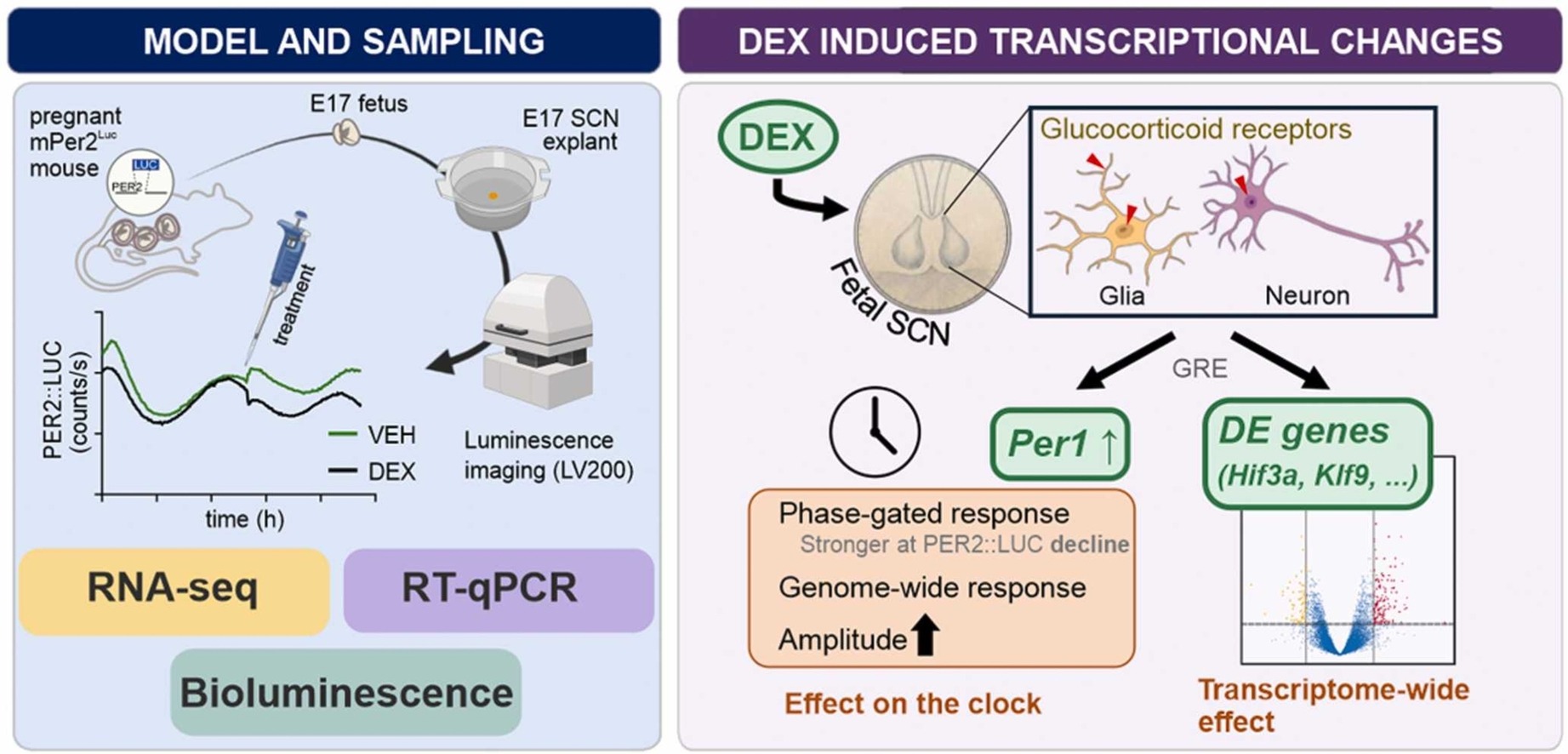
Dexamethasone is a life-saving drug in obstetrics. It is administered to mothers at risk of preterm delivery to accelerate the maturation of the fetus’s lungs and other organs. At the same time, however, it is a very potent signal that may “reprogramme” fetal physiology, including the developing biological clock. A new study by researchers at IPHYS, published in Biomedicine & Pharmacotherapy, is the first to show how dexamethasone administration affects gene activity in the brain’s central clock, which regulates the body’s daily rhythms.
Dexamethasone is a corticosteroid drug that mimics the effects of hormones produced by the adrenal cortex, particularly cortisol. It plays an indispensable role in obstetric care, as it enables faster development of the lungs and other organs before preterm birth. A previous study by researchers from the Laboratory of Biological Rhythms at IPHYS was the first to show that dexamethasone affects the setting of the fetal brain clock. “Our new findings, obtained using a mouse model, provide the first explanation of the mechanism by which elevated levels of maternal glucocorticoids can, at the molecular level, influence the developing fetal clock and reprogramme gene activity in the brain region where the clock is located,” explains the study’s first author, Martin Sládek.
A Molecular Imprint on the Genome
The body’s main biological clock, the suprachiasmatic nuclei (SCN), is located in a part of the brain called the hypothalamus and is synchronised with the light–dark cycle. It regulates the daily rhythms of almost all bodily functions. In the fetus, however, this clock is not yet fully functional: its setting depends on signals from the mother, and it matures only after birth. “From our other studies, and again in this study, we knew that dexamethasone affects the functioning of the circadian clock in the fetal SCN much more profoundly than in the adult SCN, depending on the time of day at which the drug is administered. By analysing the expression of the entire mouse genome, we have now identified specific genes involved in this process,” summarises Alena Sumová, Head of the Laboratory of Biological Rhythms and the study’s corresponding author.
Implications for Medicine
The study reveals a molecular mechanism through which dexamethasone may affect the development of the fetal biological clock, expanding our understanding of how glucocorticoids act on the developing brain. It also highlights that stress and irregular daily routines during pregnancy, which can lead to elevated glucocorticoid levels, may adversely affect developing brain structures that regulate essential physiological functions in adulthood. Understanding the molecular mechanisms that influence the development of the timing system at early developmental stages is important for clarifying the links between disrupted biological-clock development and health problems later in life.
The long-term research conducted by the Laboratory of Biological Rhythms at IPHYS indicates that regular maternal patterns of sleep, food intake, and other daily activities help create a stable rhythmic environment that is important for healthy fetal development. Findings from a mouse model cannot be directly translated into clinical practice in humans. However, they may contribute to a more precise understanding of how the timing and circumstances of glucocorticoid administration relate to the development of the timing system, and may support future research into care for high-risk pregnancies and preterm-born children.
Reference:
Sládek M., Cadenato P., Semenovykh K., Houdek P., and Sumova A. Dexamethasone affects the circadian clock in the fetal mouse suprachiasmatic nucleus at the transcriptional level. Biomed Pharmacother 199, 119486 (2026). IF = 7,5; DOI: 10.1016/j.biopha.2026.119486
Sladek M., Luzna V., Houdek P., and Sumova A. Suprachiasmatic Nuclei Possess Glucocorticoid Receptors That Activate Downstream Signaling Pathways but Do Not Entrain Their Circadian Clock. Acta Physiol (Oxf) 242, e70138 (2026). IF= 5.7 ; DOI: 10.1111/apha.70138
Čečmanova V., Houdek P., Suchmanova K., Sladek M., and Sumova A. Development and Entrainment of the Fetal Clock in the Suprachiasmatic Nuclei: The Role of Glucocorticoids. J Biol Rhythms 34, 307-322 (2019). IF = 3.0 ; DOI: 10.1177/0748730419835360